Pressing play loads the video from YouTube. Privacy
Ethnic diversity of children and young people with ADHD
- Tapomay BanerjeeCambridgeshire Community Services NHS Trust

Key points
- The research describes the ethnic distribution of children diagnosed with and under care for ADHD, following a similar project on autism.
- Ethnic minority children are almost 25% of the population in some parts of the service area, but their representation is maybe between 2 and 5%.
- More targeted awareness campaigns and support are needed, working with the leaders of the ethnic or religious groups.
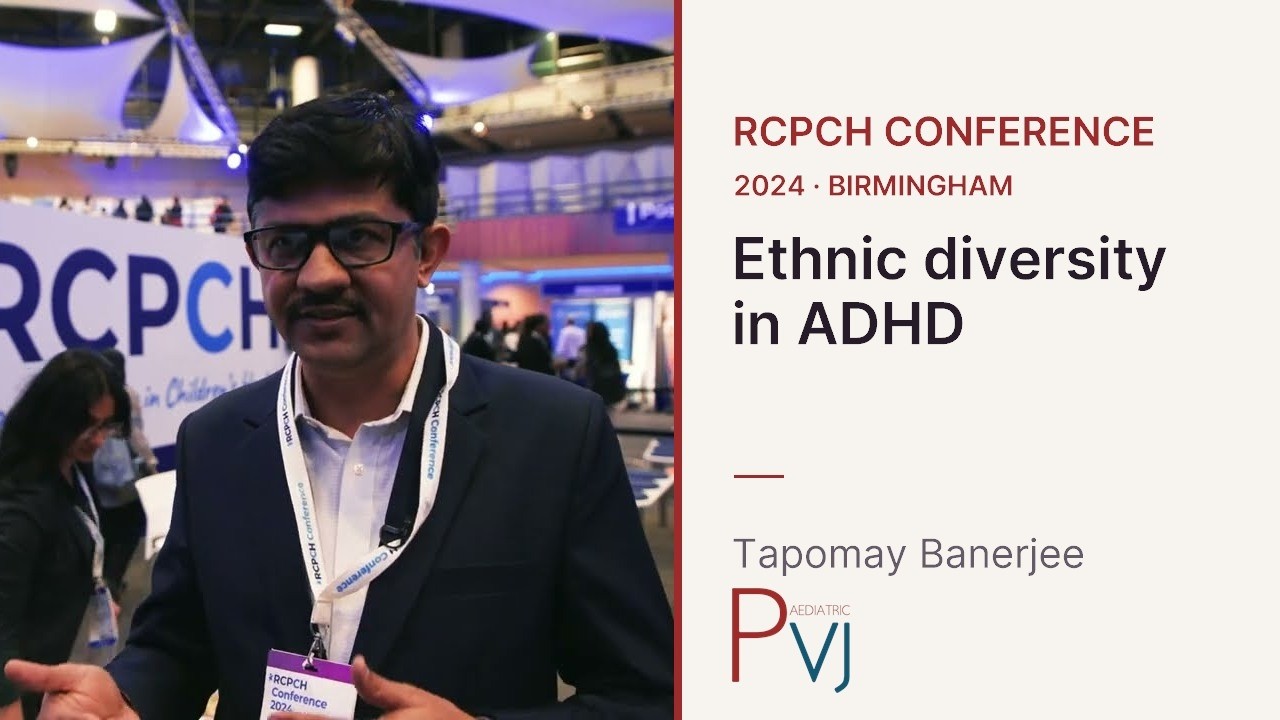
Tapomay Banerjee, Cambridgeshire Community Services NHS Trust, discusses his work on describing the ethnic distribution of children diagnosed with ADHD. Dr Banerjee and his team identified that despite the significant ethnic minority population in the areas where the research took place, the representation of ADHD was only between 2% to 5%. Targeted awareness and working with ethnic minority communities was highlighted to support the outcome and management of ADHD in these children.
This interview took place at the RCPCH conference 2024 in Birmingham, UK. These works are owned by the Paediatric Video Journal (PVJ) and are protected by copyright laws and treaties around the world. All rights are reserved.
Read the transcript
Automatic transcript, lightly edited for readability. It may contain errors, so check it against the video before quoting.
Hello, so I'm Dr Tapomay Banerjee. I am a consultant paediatrician currently working in Bedford community paediatric team and my interest is ADHD, autism and sleep problems in children. So the research which I'm going to present here today is about the ethnic distribution of children who are diagnosed and under our care for their attention deficit hyperactivity disorder, ADHD. I did a similar project last year with autism, so this year it's turn for these children with ADHD.
The reason of doing this is because I see various responses from various ethnic groups about the concept of attention deficit hyperactivity disorder, how we diagnose, how we find their early signs to recognise, and also the acceptance of diagnosis and their cultural backgrounds behind accepting a diagnosis and accepting management more importantly. So because we see various responses from various ethnic groups, and I represent a service where we serve wide range of ethnic variants, and it's a very wide geographical region as well, starting from very poor range to very rich population as well.
Looking at the study we have seen that although the numbers of ethnic minority children are quite significant, almost 25% in some parts of where I work, but their actual representation is quite low, maybe between 2 to 5%. So we need more targeted awareness campaign and more targeted support and working with the leaders of that particular ethnic or religious group to improve outcome of autism and ADHD.
Topics
Share
Cite this video
Tapomay Banerjee. “Ethnic diversity of children and young people with ADHD.” The Paediatric Video Journal, 31 December 2024. https://paediatricvj.com/videos/ethnic-diversity-of-children-and-young-people-with-adhd-benerjee/
This interview is educational content intended for healthcare professionals and is not medical advice. Views expressed are those of the speaker. © The Paediatric Video Journal. All rights reserved.