
Pressing play loads the video from YouTube. Privacy
Medicine sustainability in paediatrics: reducing carbon footprints in child healthcare
- Steve TomlinDirector of the Children’s Medicines Research & Innovation Centre at Great Ormond Street Hospital
Key points
- Twenty-five per cent of the NHS carbon footprint is from medicines, and most of that is to do with industry.
- Liquid medicines are probably about 40 times worse than tablets in terms of administration, and oral medicines are far better than IV.
- Children should be moved from liquids onto tablets where possible, and IVs should always be reviewed with a view to moving to oral medicines.
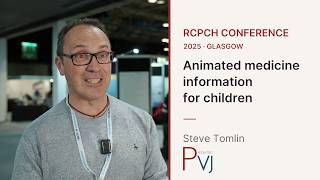
Steve Tomlin, Director of the Children’s Medicines Research & Innovation Centre at Great Ormond Street Hospital, provides insights into the importance of medicine sustainability in paediatrics. The discussion highlights that while much of the NHS carbon footprint from medicines is linked to industry, paediatric medicine has specific considerations that can make a real difference. Tomlin explains that 25% of the NHS carbon footprint is attributable to medicines, and while much of this is outside direct clinician control, there are practical steps that paediatric teams can take to reduce environmental impact. Research shows that liquid medicines have a carbon footprint about 40 times higher than tablets in terms of administration, and oral medicines are far better than intravenous (IV) routes. Tomlin encourages clinicians to transition children from liquids to tablets, and to review IV therapies for opportunities to switch to oral medications, as these changes can significantly reduce the carbon footprint associated with paediatric medicine. This interview took place at the RCPCH conference 2025 in Glasgow, Scotland.
Read the transcript
Automatic transcript, lightly edited for readability. It may contain errors, so check it against the video before quoting.
Medicine sustainability is an amazing topic and whilst everything that we do for adults is applicable to paediatrics, there's some real specifics that we need to look at for paediatrics. Medicine sustainability is so important primarily because 25% of the NHS carbon footprint is from medicines. Most of that we can't touch because it's to do with industry. But there are certain things we can do and there are certain things that paediatrics can get involved with.
And I think some of this is about understanding where carbon footprints come from and therefore one, make sure that we use medicines so that they are used properly and therefore the information that's there is the correct information, but also understanding what sorts of medicines have higher carbon footprints.
Whilst it's complex to actually work out the total carbon footprint, what we have done is some great work to show that liquids are far far worse than tablets, probably about 40 times worse in terms of administration, and that oral is far better than IV. So if I can encourage anybody to do anything, it is to get children onto tablets rather than liquids and always review IVs and try and get them onto orals. Just by doing those things for children, it will really really help the planet.
Topics
Share
Cite this video
Steve Tomlin. “Medicine sustainability in paediatrics: reducing carbon footprints in child healthcare.” The Paediatric Video Journal, 23 June 2025. https://paediatricvj.com/videos/medicine-sustainability-in-paediatrics-reducing-carbon-tomlin/
This interview is educational content intended for healthcare professionals and is not medical advice. Views expressed are those of the speaker. © The Paediatric Video Journal. All rights reserved.